Understanding the IVF Process
In Vitro Fertilization (IVF) is a detailed and carefully timed procedure that requires scientific precision and compassionate guidance. Understanding IVF and knowing the different IVF Procedure Phases helps couples understand what to expect throughout their fertility journey. Each step is designed to maximize fertilization potential and create the best environment for implantation.
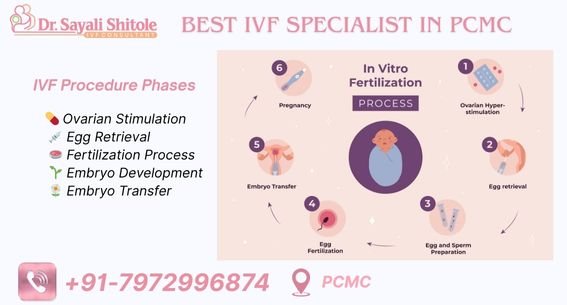
Phase 1 – Ovarian Stimulation
Treatment begins with controlled ovarian stimulation. Fertility medications are prescribed to encourage the ovaries to produce multiple mature eggs instead of the single egg that develops in a natural cycle. During this phase, hormone levels are monitored and ultrasound scans are performed to track follicular growth. The goal is to obtain a healthy number of eggs while ensuring patient safety and comfort.
Phase 2 – Egg Retrieval
Once follicles are mature, the eggs are collected in a short, painless outpatient procedure called egg retrieval. Performed under light sedation and guided by ultrasound, this phase takes only 15–20 minutes. The collected eggs are immediately handed over to embryologists for laboratory processing.
Phase 3 – Fertilization and Embryo Development
In the lab, the retrieved eggs are combined with the partner’s sperm for fertilization. Sometimes, advanced techniques like ICSI (Intracytoplasmic Sperm Injection) are used to improve fertilization rates, especially in male-factor infertility. The embryos are then cultured in incubators for three to five days while their growth and quality are closely monitored. This controlled environment allows embryologists to select the strongest embryos for transfer, a crucial step influencing IVF Success & Results.
Phase 4 – Embryo Transfer
After evaluating embryo quality, the best one (or sometimes two) is selected for embryo transfer. The procedure is quick, painless, and usually does not require anesthesia. The embryo is gently placed inside the uterus using a fine catheter. Proper timing and uterine receptivity play a key role in implantation success.
Phase 5 – Luteal Support and Pregnancy Test
Following transfer, hormone supplements are given to support the uterine lining and help the embryo implant successfully. About two weeks later, a blood test measures hCG levels to confirm pregnancy. This stage determines whether implantation has occurred during the IVF Treatment and marks the beginning of a healthy gestation.
Factors Affecting IVF Success & Results
The overall IVF Success & Results depend on many factors — the woman’s age, egg and sperm quality, lifestyle habits, and the experience of the fertility team. A balanced diet, reduced stress, adequate sleep, and emotional well-being can significantly enhance outcomes. At the clinic of Dr. Sayali Shitole — IVF & Fertility Specialist and one of the Best IVF Specialists in PCMC, every stage of these procedure phases and IVF Techniques is handled with precision, transparency, and care, ensuring patients receive both advanced medical treatment and compassionate support.
Understanding the IVF Procedure Phases empowers couples to approach the process with confidence, knowing that each step brings them closer to the miracle of parenthood.

Dr. Sayali Chavan - Shitole
Dr. Sayali Shitole Best IVF & Fertility Specialist in Pune is a reliable and among the Best IVF Clinic in Pune & IVF Centre in Pune. Dr. Sayali Shitole is equipped with all ultra-modern facilities IVF Clinic/IVF Centre and Test Tube Baby Centre in Pune.