Key Takeaways Endometriosis affects 10-15% of women of reproductive age and is found in 30-40% of infertile women.Laparoscopy is the gold standard for both diagnosing and treating endometriosis.For Stage I and II endometriosis, laparoscopic surgery improves natural conception rates by up to 40%.According to ICMR, early surgical intervention for endometriosis preserves ovarian reserve better than waiting.Recovery after laparoscopy for endometriosis is typically 3-5 days, with full recovery in 1-2 weeks.Women with Stage III or IV endometriosis often need IVF in addition to or instead of surgery.World Endometriosis Day on March 28th raises awareness of this underdiagnosed condition. |
Table of contents
- Endometriosis and Laparoscopy in Pune: Statistics 2025-2026
- What Is Endometriosis and Why Does It Affect Fertility?
- What Are the Symptoms of Endometriosis?
- How Laparoscopy Treats Endometriosis
- Laparoscopy for Endometriosis: Pre-Op, Procedure and Recovery
- When Is IVF Better Than Surgery for Endometriosis?
- Endometriosis and Laparoscopy in Pune
- Frequently Asked Questions
- Conclusion
| Quick Facts Endometriosis prevalence: 10-15% of reproductive-age women (WHO) Endometriosis in infertile women: 30-40% of cases (ICMR) Laparoscopy cost Pune: INR 50,000 to INR 1.2L Recovery after laparoscopy: 3-5 days rest, 1-2 weeks full recovery Natural conception improvement Stage I/II: Up to 40% after surgery Time to try naturally post-surgery: 6-12 months recommended |
Endometriosis and Laparoscopy in Pune: Statistics 2025-2026
| Metric | Data Point | Source |
| Endometriosis prevalence worldwide | 10-15% of reproductive-age women | WHO 2022 |
| Endometriosis among infertile women | 30-40% | ICMR 2024 |
| Laparoscopy cost Pune | INR 50,000 to INR 1.2L | Industry estimate |
| Conception improvement after surgery (Stage I/II) | Up to 40% | PubMed 2023 |
| Endometrioma recurrence after 5 years | 20-40% | Industry estimate |
| Delay in endometriosis diagnosis in India | 7-10 years average | Industry estimate |
| Women with endometriosis needing IVF (Stage III/IV) | Significant proportion | ICMR 2024 |
What Is Endometriosis and Why Does It Affect Fertility?
Endometriosis is a condition where tissue similar to the lining of the uterus grows outside the uterus. These implants can form on the ovaries, fallopian tubes, the outer surface of the uterus and in the pelvic cavity. Every month during the menstrual cycle, this tissue bleeds, causing inflammation and the formation of scar tissue (adhesions).
Over time, adhesions distort the anatomy of the pelvis. Ovarian endometriomas (chocolate cysts) damage ovarian tissue and reduce egg quality. Blocked tubes prevent fertilisation. Inflamed pelvic environment affects egg pickup and embryo implantation. This is why endometriosis is found in 30-40% of women investigated for infertility.
The tragedy of endometriosis is how long it takes to diagnose. The average delay between first symptoms and diagnosis in India is 7-10 years. By that time, fertility may already be significantly affected. On World Endometriosis Day, this year on March 28th, the message is simple: if you have severe period pain, don’t ignore it.
What Are the Symptoms of Endometriosis?
The hallmark symptom is painful periods (dysmenorrhoea) that don’t respond to standard pain relief. Other symptoms include pelvic pain throughout the cycle, pain during or after sex (dyspareunia), pain during bowel movements or urination during periods, heavy bleeding and bloating. Some women have all these symptoms. Others have minimal symptoms despite significant disease.
The mismatch between symptoms and disease severity is one of endometriosis’s defining characteristics. A woman with Stage IV disease and widespread adhesions may have less pain than a woman with Stage I disease. This makes symptom-based diagnosis unreliable. Only laparoscopy with direct visualisation and tissue biopsy can definitively diagnose endometriosis.
How Laparoscopy Treats Endometriosis
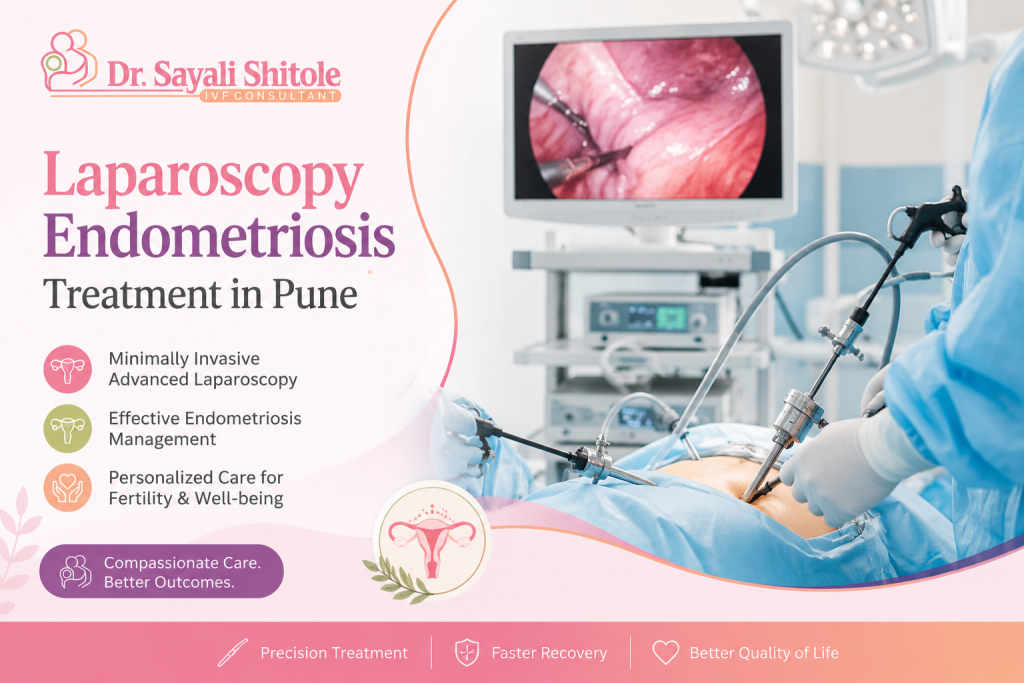
Laparoscopy is both the diagnostic gold standard and the primary surgical treatment for endometriosis. Under general anaesthesia, a thin camera is inserted through a small incision in the navel. Additional small incisions allow surgical instruments to be introduced. The surgeon can see endometriosis implants directly and treat them during the same procedure.
Treatment options during laparoscopy include excision (cutting out) of implants, ablation (burning) of surface lesions, drainage and stripping of endometriomas and division of adhesions. Excision is generally considered superior to ablation for endometriomas as it removes the cyst wall completely, reducing recurrence risk.
Laparoscopy for Endometriosis: Pre-Op, Procedure and Recovery
| Phase | What Happens | Duration | Notes |
| Pre-operative assessment | Blood tests, anaesthetic review, ultrasound | 1-2 weeks before | Day procedure planning |
| Procedure | General anaesthesia, laparoscopy, treatment | 1-2 hours depending on extent | Day procedure or overnight stay |
| Immediate recovery | Recovery room, pain management | 2-4 hours post-procedure | Mild shoulder-tip pain from gas |
| Short-term recovery | Rest at home, light activities | 3-5 days | Avoid heavy lifting |
| Full recovery | Return to normal activities | 1-2 weeks | Driving usually after 1 week |
| Post-surgical fertility window | 6-12 months to try naturally | Ongoing | Before endometriosis recurs |
When Is IVF Better Than Surgery for Endometriosis?
For women with Stage III or IV endometriosis, advanced age or diminished ovarian reserve, IVF may be more effective than surgery in achieving pregnancy. Operating on a large endometrioma reduces the number of follicles in the ovary and can permanently lower ovarian reserve. In women already struggling with a low egg count, this trade-off must be carefully considered.
For younger women with mild to moderate disease and good ovarian reserve, laparoscopy followed by a natural conception attempt for 6-12 months is the preferred first approach. If this doesn’t result in pregnancy, IVF is the next step. The combination of laparoscopy to improve the pelvic environment and IVF to achieve fertilisation gives the best overall outcomes.
Endometriosis and Laparoscopy in Pune
Pune has several gynaecologists and fertility specialists experienced in laparoscopic surgery for endometriosis. The procedure is available at hospitals in Kalyani Nagar, Baner, Pimpri Chinchwad and Wakad. Femcare Fertility in Kalyani Nagar, where Dr. Sayali Shitole Chavan practises, offers diagnostic and operative laparoscopy as part of a comprehensive fertility assessment pathway.
Patients from Hinjewadi, Kothrud and Koregaon Park regularly visit Kalyani Nagar for laparoscopic procedures at facilities with a strong track record. If you’ve been experiencing severe period pain for more than 6 months and haven’t been investigated, a consultation should not wait.
Frequently Asked Questions
Q: Can endometriosis be cured by laparoscopy?
Laparoscopy treats endometriosis but doesn’t always cure it permanently. The recurrence rate is 20-40% within 5 years without ongoing medical management. However, surgical treatment significantly reduces symptoms, improves fertility and can give many women years of normal reproductive function before any recurrence.
Q: How much does laparoscopy for endometriosis cost in Pune?
The cost of laparoscopy for endometriosis in Pune ranges from INR 50,000 to INR 1.2L depending on the complexity of the procedure, whether it’s diagnostic or operative, the hospital tier and whether general anaesthesia and overnight stay are required. Your doctor will provide a detailed estimate after your initial assessment.
Q: How soon after laparoscopy can I try to get pregnant?
Most doctors recommend waiting 4-6 weeks after laparoscopy before attempting natural conception. The recommended window to try naturally after surgery for Stage I or II endometriosis is 6-12 months. After this, if pregnancy hasn’t occurred, IVF is typically recommended before the risk of recurrence increases.
Q: Does laparoscopy hurt?
Laparoscopy is performed under general anaesthesia, so there’s no pain during the procedure. Post-operatively, shoulder-tip pain from the CO2 gas used during the procedure is common and resolves within 24-48 hours. Mild abdominal soreness at incision sites is expected. Most women manage post-operative discomfort well with standard pain relief.
Q: I have an endometrioma. Should I have surgery before IVF?
This depends on the endometrioma size and your ovarian reserve. Endometriomas over 4cm may be drained or removed before IVF to improve egg access during retrieval. However, operating on smaller endometriomas can reduce ovarian reserve unnecessarily. A specialist in both laparoscopy and IVF, like Dr. Sayali Shitole Chavan, will give you individualised advice.
Conclusion
Laparoscopy for endometriosis in Pune is the gold standard diagnostic and treatment procedure for one of the most underdiagnosed causes of female infertility. When done by an experienced surgeon at the right stage of the condition, it can meaningfully improve natural fertility and IVF outcomes.
Dr. Sayali Shitole Chavan at Femcare Fertility, Kalyani Nagar, combines expertise in laparoscopic surgery with reproductive medicine. This allows her to manage endometriosis comprehensively, from diagnosis to treatment to fertility planning.
If you suspect endometriosis or want to know how it’s affecting your fertility,
Book a consultation at drsayalichavanivfdoctor today.

Dr. Sayali Chavan - Shitole
Dr. Sayali Shitole Best IVF & Fertility Specialist in Pune is a reliable and among the Best IVF Clinic in Pune & IVF Centre in Pune. Dr. Sayali Shitole is equipped with all ultra-modern facilities IVF Clinic/IVF Centre and Test Tube Baby Centre in Pune.