Table of contents
Starting a family with Assisted Reproductive Technology (ART) can be an emotional experience, with much of the focus on follicles, embryos, and success rates. But as your body goes through major hormonal changes during treatments like IVF, other parts of your health, such as your gallbladder, can also be affected. This leads many women to ask: Can infertility treatment cause gallstones?
The short answer is that infertility treatments do not cause gallstones to appear suddenly, but the high hormone levels used to stimulate egg production can raise the risk of developing stones or bring on symptoms in women who are already at risk.
Key Takeaways
- Hormonal Link: Elevated estrogen levels during In Vitro Fertilization (IVF) increase cholesterol saturation in bile, a primary cause of gallstones.
- Gallbladder Stasis: Progesterone, used for luteal support, can relax the gallbladder, preventing effective emptying.
- Risk Profile: Women with high BMI, PCOS, or a family history of stones are at a higher risk during fertility cycles.
- Prevention: Hydration, a low-fat diet during stimulation, and expert monitoring can mitigate risks.
- Consultation: Always discuss your digestive health with your IVF doctor in Pune before starting a cycle.
The Science: How IVF Affects Your Gallbladder
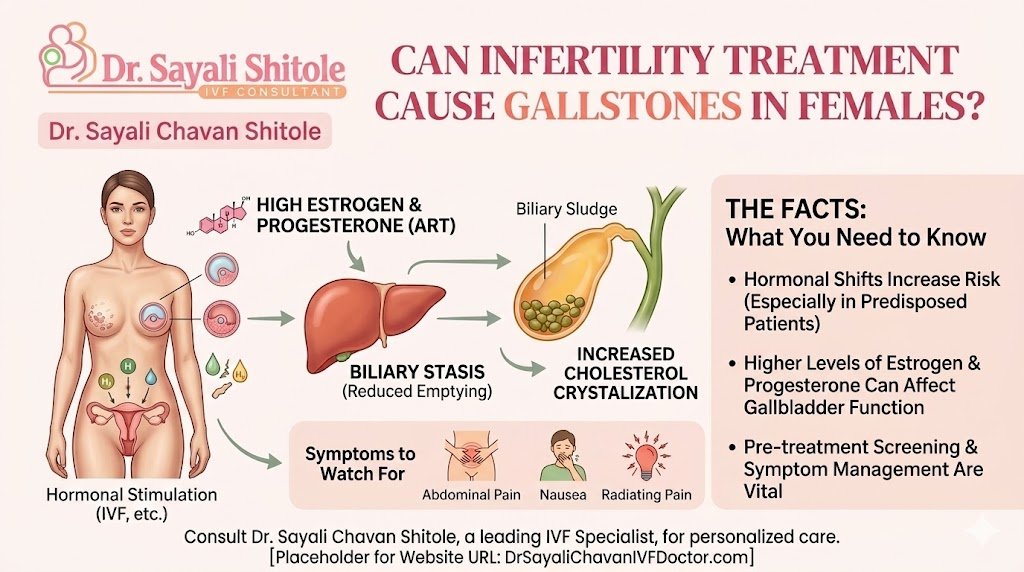
To understand the connection, it helps to look at the two main hormones in fertility treatment: estrogen and progesterone.
1. Estrogen and Cholesterol Saturation
In a normal menstrual cycle, estrogen levels fluctuate. During IVF, medications are used to help the ovaries make more eggs, which causes estrogen levels to rise much higher than usual. Studies show that high estrogen makes the liver move more cholesterol from the blood into the bile. When there is too much cholesterol in the bile, it can form crystals, sometimes called “sludge,” or even stones.
2. Progesterone and Biliary Stasis
After egg retrieval,After egg retrieval, progesterone is usually given to help prepare the uterine lining for implantation. Progesterone relaxes muscles. While this helps keep the uterus calm, it also relaxes the muscles in the gallbladder wall. As a result, bile can stay in the gallbladder too long, which makes it easier for stones to form.cs: Gallstones & Hormonal Factors (2025-2026)
Recent clinical data show a clear link between changes in hormone levels and gallbladder health. The table below summarizes the latest findings on the prevalence of gallstones and the risk factors for women of reproductive age.
| Category | Statistics (2025-2026 Data) | Risk Impact on Fertility Patients |
| General Female Prevalence | 7.37% – 9.69% | Higher baseline risk compared to males (approx. 2-3x). |
| Estrogen-Progestin Users | 95.6% symptomatic association | High-dose hormones significantly correlate with GB issues. |
| Pregnancy/High Hormone States | 2% – 5.5% new stone formation | Rapid hormonal spikes trigger “sludge” formation. |
| PCOS Patients | 1.5x higher risk | Metabolic factors in PCOS compound with IVF hormones. |
| High BMI (>30) | 2.4x risk increase | Obesity and hormones create a “perfect storm” for stones. |
Symptoms to Watch For During Your Cycle
- Sudden, intense pain in the upper right portion of your abdomen.
- Pain that radiates to your right shoulder or back.
- Nausea or vomiting that persists beyond the typical “morning sickness” window.
- Bloating that feels “sharp” rather than “heavy.”
Managing the Risk: Tips for Fertility Patients
If you are planning to see an IVF doctor in Pune, taking a few simple steps can help you avoid unexpected health issues along the way.
- Pre-IVF Screening: If you have a history of indigestion or a family history of gallstones, ask for a quick abdominal ultrasound before starting stimulation.
- Stay Hydrated: Water helps maintain the consistency of bile.
- Low-Fat, High-Fiber Diet: Avoid “trigger foods” (fried, greasy, or highly processed) during the weeks of ovarian stimulation.
- Weight Management: If time permits, achieving a healthy BMI before starting IVF can lower the metabolic risk of stone formation.
Why Expert Guidance Matters
Navigating the complexities of hormones and digestive health takes more than just following a standard plan. It needs a specialist who considers your overall health. The IVF doctor in Pune emphasizes that fertility care isn’t just about the laboratory—it’s about the patient’s overall well-being. With over 15 years of experience, Dr. Sayali combines advanced technology with a compassionate, holistic approach. As a leading IVF specialist in Pune, she tailors treatment plans to account for hormonal sensitivities, ensuring that your path to parenthood is as smooth and safe as possible. At the IVF & Endoscopy Center, Pune, her focus remains on ethical care and high success rates, turning the dream of parenthood into a healthy reality.
Conclusion
Although the chance of getting gallstones from infertility treatment is low for most women, the hormone changes during IVF can increase the risk. By working with an experienced IVF doctor in Pune and following healthy habits for your gallbladder during your cycle, you can keep your focus on what matters most—your future family.

Dr. Sayali Chavan - Shitole
Dr. Sayali Shitole Best IVF & Fertility Specialist in Pune is a reliable and among the Best IVF Clinic in Pune & IVF Centre in Pune. Dr. Sayali Shitole is equipped with all ultra-modern facilities IVF Clinic/IVF Centre and Test Tube Baby Centre in Pune.