| Key Takeaways 1. Hysteroscopy is the only investigation that directly visualises the inside of the uterine cavity. 2. Endometrial polyps are found in 10-24% of infertile women and are easily removed during hysteroscopy. 3. A uterine septum, found in 2-3% of women, doubles the miscarriage risk and can be corrected in 30 minutes. 4. According to ICMR, hysteroscopy before IVF is recommended when previous transfers have failed. 5. Diagnostic hysteroscopy in Pune costs INR 15,000-35,000 as an outpatient or day procedure. 6. Operative hysteroscopy (to remove polyps, septum or adhesions) costs INR 30,000-80,000. 7. Recovery from hysteroscopy is rapid: most women return to work within 1-2 days. |
| Quick Facts Diagnostic hysteroscopy cost Pune: INR 15,000 to INR 35,000 Operative hysteroscopy cost Pune: INR 30,000 to INR 80,000 Polyp prevalence in infertile women: 10-24% Uterine septum prevalence: 2-3% of women Recovery after hysteroscopy: 1-2 days for diagnostic; 3-5 days for operative Anaesthesia required: Local or general, usually day procedure |
Hysteroscopy for Fertility in Pune: Statistics 2025-2026
| Metric | Data Point | Source |
| Polyp prevalence in infertile women | 10-24% | PubMed 2023 |
| Uterine septum in general population | 2-3% | Industry estimate |
| Septum linked to miscarriage | Doubles miscarriage risk | ICMR 2024 |
| Submucosal fibroid causing infertility | 5-10% of infertile women | Industry estimate |
| Intrauterine adhesions prevalence | 1-3% | Industry estimate |
| Hysteroscopy before IVF improving success | Documented improvement in recurrent failure | PubMed 2022 |
| Diagnostic hysteroscopy cost Pune | INR 15,000 to INR 35,000 | Industry estimate |
What Is Hysteroscopy?
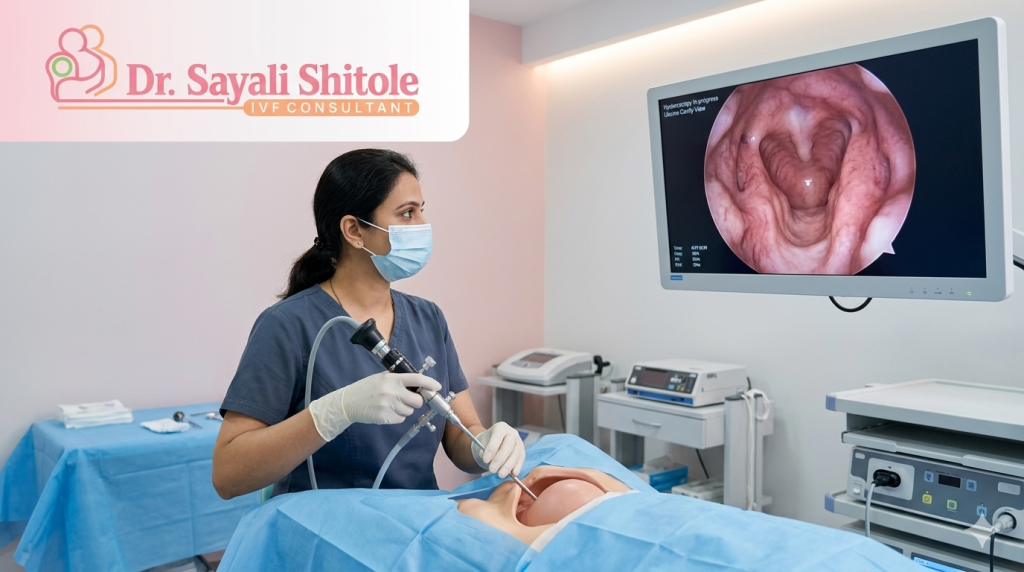
Hysteroscopy is the examination of the inside of the uterus (endometrial cavity) using a thin telescope-like instrument called a hysteroscope, inserted through the cervix without any abdominal incision. The surgeon views the cavity on a screen and can both diagnose and in many cases treat problems during the same procedure.
Unlike ultrasound, which shows the uterus from the outside, hysteroscopy goes inside. Small polyps, a uterine septum, adhesions from infections or previous procedures and submucous fibroids that distort the cavity are all clearly visible and treatable via hysteroscopy. These conditions can prevent implantation or cause early miscarriage without causing any obvious symptoms.
When Is Hysteroscopy Recommended for Fertility?
| Indication | Why Hysteroscopy Helps | Evidence for Use |
| Unexplained infertility | Finds hidden polyps, septum or adhesions | ICMR 2024 recommended |
| Recurrent IVF failure | Identifies subtle cavity abnormalities | Strongly recommended |
| Recurrent miscarriage | Rules out septum, adhesions | ICMR 2024 recommended |
| Abnormal uterine bleeding | Diagnoses polyps or fibroids causing bleeding | Standard of care |
| Saline sonography abnormality | Confirms and treats identified lesion | Logical next step |
| Before first IVF | Baseline cavity assessment, controversial | Some centres advise routinely |
What Can Hysteroscopy Find and Fix?
Endometrial polyps are the most common finding in infertile women. These small outgrowths of the endometrial lining may interfere with implantation. Their removal during hysteroscopy (polypectomy) improves clinical pregnancy rates by an estimated 20-30% in women with infertility. The procedure takes 15-20 minutes.
A uterine septum is a fibrous partition in the uterine cavity that develops during foetal development. It doubles the miscarriage rate and reduces implantation. Hysteroscopic metroplasty (septum resection) takes 20-40 minutes and has excellent outcomes. Pregnancy rates improve significantly after correction.
Intrauterine adhesions (Asherman’s syndrome) from previous uterine procedures or infections cause the walls of the uterus to stick together. Hysteroscopic adhesiolysis separates these adhesions and restores the normal cavity. Multiple procedures may be needed for severe cases.
What to Expect: The Hysteroscopy Procedure in Pune
Diagnostic hysteroscopy is commonly done under local anaesthesia or mild sedation as an outpatient procedure. You’ll be positioned similarly to a cervical smear test. The hysteroscope is gently inserted through the cervix. A small amount of fluid or gas distends the cavity so the surgeon can see clearly. The procedure takes 10-20 minutes.
If abnormalities are found, operative hysteroscopy addresses them immediately or at a planned second procedure. Mild cramping during and after the procedure is common and managed with standard pain relief. Spotting for 2-3 days after is normal.
Operative hysteroscopy (polyp removal, septum resection, adhesiolysis) typically uses general anaesthesia and takes 30-60 minutes. It’s usually a day procedure with discharge the same day.
Hysteroscopy in Pune: Who Needs It Before IVF?
Not every woman needs hysteroscopy before a first IVF cycle. The current evidence supports routine hysteroscopy before IVF for women with recurrent implantation failure (2 or more failed embryo transfers) and before IVF in women with a history of recurrent miscarriage or unexplained infertility. For women having their first IVF cycle with no history suggesting uterine abnormality, the benefit of routine hysteroscopy is less clear.
Femcare Fertility in Kalyani Nagar, where Dr. Sayali Shitole Chavan practises, offers hysteroscopy as part of a complete fertility workup. The decision to perform hysteroscopy is individualised based on the patient’s history, ultrasound findings and previous treatment response.
Frequently Asked Questions
Q1 : Is hysteroscopy painful?
Diagnostic hysteroscopy under local anaesthesia causes discomfort similar to a cervical smear test, with mild cramping during the procedure. Most women tolerate it well and return to work the same day or next day. Operative hysteroscopy under general anaesthesia involves no pain during the procedure. Post-procedure cramping resolves within 24-48 hours.
Q2 : How long after hysteroscopy can I try IVF or natural conception?
After a simple diagnostic hysteroscopy, you can proceed to IVF in the next cycle. After operative hysteroscopy for polyp removal, one cycle of rest is usually advised. After septum resection or adhesiolysis, 1-3 months of hormonal therapy is given to allow the endometrium to regenerate before the next IVF cycle.
Q3 : Will hysteroscopy affect my ability to get pregnant?
Diagnostic hysteroscopy does not affect fertility. Operative hysteroscopy to remove polyps, a septum or adhesions generally improves fertility outcomes. There is a small risk of introducing infection or causing minor adhesions with any uterine procedure, which is why it should be done by an experienced surgeon in a properly equipped facility.
Q4: Is hysteroscopy covered by insurance in India?
Hysteroscopy for medical indications (abnormal bleeding, polyps, fibroids) is generally covered by comprehensive health insurance in India. When performed specifically as part of an infertility investigation or before IVF, it may be excluded under ‘infertility treatment’ clauses. Check your policy before the procedure.
Q5 : How is hysteroscopy different from laparoscopy?
Hysteroscopy examines the inside of the uterus (through the cervix, no incision). Laparoscopy examines the outside of the uterus, tubes and pelvis (via small abdominal incisions, under general anaesthesia). They provide complementary information and are often done together as part of a complete infertility workup.
Conclusion
Hysteroscopy for fertility in Pune is a safe, quick and often clinically decisive procedure. Finding and fixing a hidden polyp, septum or adhesion can be the difference between a failed IVF cycle and a successful pregnancy. Its value is greatest for women with recurrent implantation failure or unexplained infertility.
Dr. Sayali Shitole Chavan at Femcare Fertility, Kalyani Nagar, provides both diagnostic and operative hysteroscopy as part of a comprehensive fertility management plan. Her expertise ensures that hysteroscopy findings translate directly into improved treatment strategies.

Dr. Sayali Chavan - Shitole
Dr. Sayali Shitole Best IVF & Fertility Specialist in Pune is a reliable and among the Best IVF Clinic in Pune & IVF Centre in Pune. Dr. Sayali Shitole is equipped with all ultra-modern facilities IVF Clinic/IVF Centre and Test Tube Baby Centre in Pune.