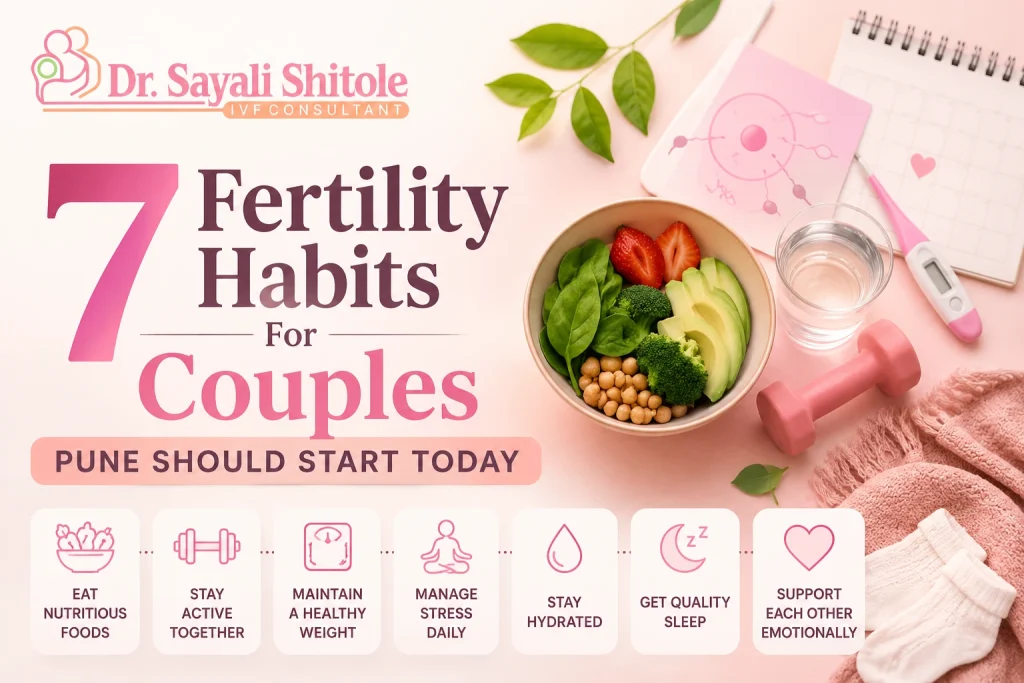
| Key Takeaways Diet quality directly affects egg and sperm quality. A Mediterranean-style diet improves fertility outcomes. Sleep deprivation reduces LH surge in women and testosterone in men, both critical for conception. Daily moderate exercise improves insulin sensitivity and ovarian function, especially for women with PCOS.According to ICMR, folic acid supplementation before conception reduces neural tube defects by 70%. Limiting caffeine to under 200mg per day is advised for women trying to conceive. Both partners benefit equally from lifestyle optimisation. Male factor contributes to 40-50% of infertility. Communication between partners about fertility stress improves relationship quality and treatment outcomes. |
Fertility Lifestyle Factors: Evidence Summary 2025-2026
| Habit | Fertility Impact | Time to Benefit | Source |
| Mediterranean diet | Improves egg and sperm quality | 3 months | PubMed 2023 |
| 7-8 hours sleep | Normalises LH and testosterone | 2-4 weeks | Industry estimate |
| 30 min daily walking | Improves insulin, reduces PCOS symptoms | 4-8 weeks | ICMR 2024 |
| Folic acid 400-800 mcg | Reduces neural tube defects 70% | Start 3 months before | MoHFW India |
| Quit alcohol | Improves sperm motility and egg quality | 3 months | Indian J Medical Research |
| Quit smoking | Improves ovarian reserve markers | 3-6 months | WHO 2022 |
| Stress management | Lowers cortisol, normalises GnRH | 6-8 weeks | PubMed 2022 |
Habit 1: Eat for Your Fertility
Food is medicine, and this is especially true for fertility. The research on diet and reproductive health is consistent: couples who eat a diet rich in vegetables, pulses, whole grains, healthy fats and lean protein have better fertility markers than those who eat a diet dominated by ultra-processed food, refined sugar and trans fats.
You don’t need to abandon Indian food. Quite the opposite. Methi leaves, palak, rajma, chana, sesame seeds, walnuts and groundnuts are all fertility-supporting foods that feature naturally in Indian cooking. Ghee in moderate amounts is a healthy fat. Turmeric has anti-inflammatory properties that support reproductive health.
What to avoid? Heavily processed namkeens, white bread, fried street food consumed daily and sugary cold drinks. The monsoon season in Pune brings a temptation to eat fried snacks. During your fertility preparation window, limiting these is worthwhile.
Habit 2: Prioritise Sleep Every Night
Sleep is when the body regulates hormones. Prolactin, growth hormone and LH all have specific secretion patterns during sleep. Disrupted sleep shifts these rhythms. For women, this affects the LH surge that triggers ovulation. For men, testosterone is primarily produced during deep sleep, and chronic sleep deprivation measurably reduces testosterone levels.
Pune’s IT professionals are particularly vulnerable to poor sleep. Night shifts, late calls with US or UK teams and screen overuse before bed are common patterns. A consistent bedtime, screen-free 30 minutes before sleep and a cool, dark bedroom are evidence-based sleep improvements that require no medication or expense.
Habit 3: Move Your Body Moderately Every Day
Regular moderate exercise improves insulin sensitivity, which is particularly important for women with PCOS. It also reduces stress hormones and body weight, both of which affect fertility. A 30-minute walk five days a week is sufficient. Swimming and yoga are excellent additions.
Avoid over-exercising. Excessive exercise, particularly in women who are already lean, can reduce oestrogen and cause anovulation. The key is moderate, consistent movement. Even a 20-minute walk around Pune’s parks or on a treadmill during lunch breaks counts.
Habit 4: Both Partners Take Their Supplements
Folic acid is mandatory for women trying to conceive and should be started at least three months before attempting pregnancy. Men benefit from antioxidant supplements including Vitamin C, Vitamin E, selenium and zinc, which protect sperm DNA from oxidative damage.
Vitamin D deficiency is very common in urban India, including Pune, despite the sunshine. A simple blood test identifies deficiency, and supplementation is inexpensive. Low Vitamin D is associated with reduced IVF implantation rates. Both partners should get their Vitamin D level checked before starting fertility treatment.
Habit 5: Quit Alcohol and Smoking Completely
There is no safe level of alcohol for couples trying to conceive. Alcohol affects oestrogen and progesterone metabolism in women and reduces sperm motility and morphology in men. For women undergoing IVF, even social drinking is associated with measurably lower success rates.
Smoking reduces ovarian reserve and accelerates egg loss. Women who smoke have an earlier menopause on average. Passive smoking has similar effects. Both partners should quit at least three months before IVF to allow sperm and egg quality to improve through their natural renewal cycles.
Habit 6: Manage Your Caffeine Intake
Coffee culture is strong in Pune’s tech campuses. Caffeine in moderation (under 200mg daily, about one to two cups of filter coffee) is generally considered safe for fertility. Exceeding this amount is associated with a modest increase in miscarriage risk and a reduction in sperm motility.
Energy drinks and pre-workout supplements often contain far more caffeine than a cup of coffee, along with other stimulants. Avoid these entirely during fertility treatment and the pre-conception period.
Habit 7: Talk to Each Other About the Stress
Fertility challenges test relationships. The pressure to conceive, the disappointment of negative results and the financial strain of treatment all create stress between partners. Couples who communicate openly about their fears, expectations and disappointments navigate this period better than those who internalise.
Day is a good moment to have the honest conversation. Not about cycles and protocols. About how you’re feeling as a team. Are you supporting each other? Are you putting your relationship second to the treatment? A strong partnership is itself a factor in IVF resilience.
Frequently Asked Questions
Q: How long does it take to see the effects of lifestyle changes on fertility?
A full sperm cycle is approximately 72 days. Egg maturation takes 90 days. The impact of most lifestyle interventions on sperm and egg quality therefore takes 2-3 months to show measurable change. Starting changes 3 months before IVF gives the best results.
Q: Can Indian food support fertility?
Absolutely. Indian cuisine is well-suited to a fertility-supportive diet. Dal, leafy greens, sesame, almonds, eggs, fish and spices like turmeric and cumin are all beneficial. The key is reducing ultra-processed foods and excess sugar while keeping traditional whole foods at the centre of your diet.
Q: Is yoga safe during IVF?
Gentle yoga, pranayama and meditation are safe and beneficial throughout most of the IVF cycle. Avoid inversions, very intense poses and anything that puts pressure on the abdomen after egg retrieval or embryo transfer. Your doctor will advise on activity restrictions for your specific protocol.
Q: Should my husband also make lifestyle changes?
Yes, definitely. Male factors contribute to 40-50% of infertility cases. Sperm quality improves significantly with dietary changes, stopping alcohol and smoking, reducing stress and taking antioxidant supplements. The three-month window before IVF is the critical period for male preparation.
Q: Can weight loss improve fertility in overweight women?
Yes. Even a 5-10% reduction in body weight in women with a BMI over 27 is associated with improved ovulation regularity, better response to ovarian stimulation and higher IVF success rates. Gradual, sustainable weight loss through diet and exercise is more beneficial than rapid weight loss from extreme dieting.
Conclusion
Building fertility habits doesn’t require a complete life overhaul. These seven practical steps, grounded in evidence and adapted for Indian lifestyles in Pune, can meaningfully improve your chances of conception and IVF success. Start with whichever feels most achievable today.
Dr. Sayali Shitole Chavan at Femcare Fertility, Kalyani Nagar, provides personalised pre-conception lifestyle guidance alongside clinical fertility treatment. Her patient-focused approach treats the whole person, not just the diagnosis.

Dr. Sayali Chavan - Shitole
Dr. Sayali Shitole Best IVF & Fertility Specialist in Pune is a reliable and among the Best IVF Clinic in Pune & IVF Centre in Pune. Dr. Sayali Shitole is equipped with all ultra-modern facilities IVF Clinic/IVF Centre and Test Tube Baby Centre in Pune.