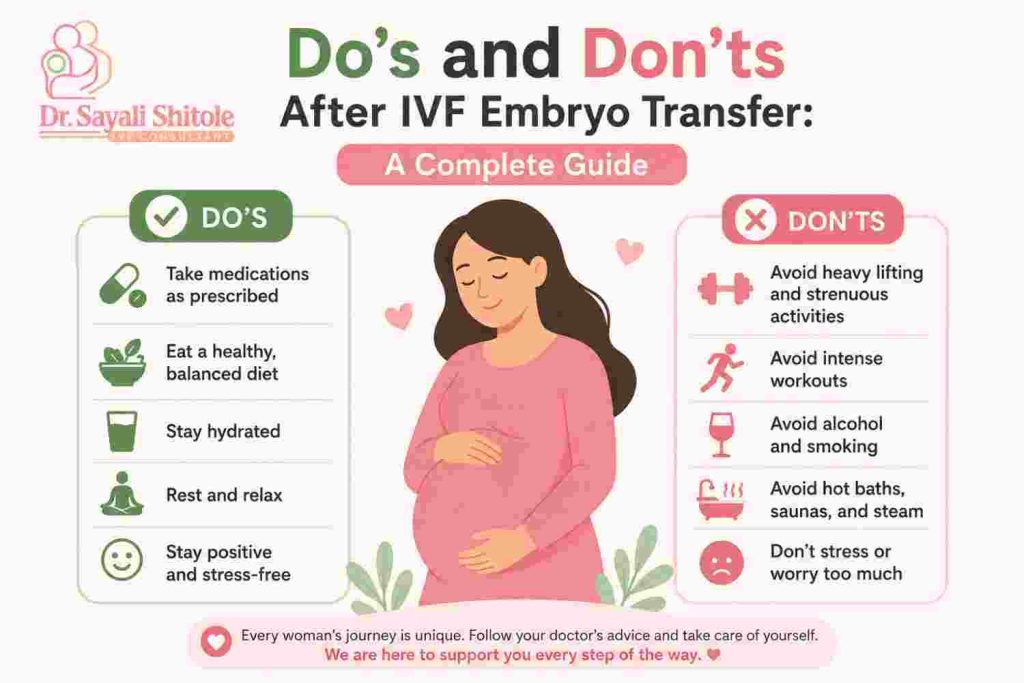
After embryo transfer, rest for 24 to 48 hours, continue progesterone support and eat a light, nutritious diet. Avoid heavy lifting, strenuous exercise, hot baths and alcohol. Wait for the scheduled beta hCG blood test with Dr. Sayali Chavan Shitole rather than testing early at home.
Quick Facts
- The two week wait after embryo transfer usually lasts 9 to 14 days depending on whether a day 3 or day 5 (blastocyst) embryo was transferred
- Implantation typically begins within the first 1 to 5 days after a blastocyst transfer
- Rest beyond 24 to 48 hours has not been shown to improve IVF outcomes
- A beta hCG blood test is more reliable than a home urine test in the days immediately after transfer
General reproductive health information for India is available through the National Health Portal at nhp.gov.in
Post Embryo Transfer Timeline at a Glance
| Aspect | Typical Range | Source |
| Recommended rest after transfer | 24 to 48 hours | Industry estimate |
| Two week wait duration | 9 to 14 days | Industry estimate |
| Implantation window (blastocyst transfer) | Day 1 to day 5 post transfer | Industry estimate |
| Beta hCG blood test timing | Day 12 to day 14 post transfer | Industry estimate |
| Repeat hCG test to confirm rising levels | 48 hours after first positive test | Industry estimate |
Understanding the Two Week Wait After Embryo Transfer
The period between embryo transfer and the beta hCG blood test is commonly called the two week wait. This phase can feel long because the outcome is not visible and there is little to do except wait. Understanding what happens inside the body during this time can make the wait less stressful.
After a blastocyst (day 5) embryo is placed in the uterus, it needs to hatch out of its outer shell and attach itself to the uterine lining. This process, called implantation, generally happens within the first five days after transfer, though the exact timing varies from person to person. Once implantation begins, the embryo starts producing the hormone hCG, which is what a pregnancy test detects.
Because implantation itself does not cause noticeable symptoms in most women, it is normal to feel nothing unusual during this window. Do not use the presence or absence of symptoms to judge whether the transfer has worked. Dr. Sayali Chavan Shitole at Femcare Fertility, Kalyani Nagar, advises patients to treat the two week wait as a period of gentle self care rather than a countdown filled with anxiety.
Do’s After Embryo Transfer
Following a few simple practices after embryo transfer can support your body without putting unnecessary strain on your daily routine.
| Do | Why It Helps |
| Rest for 24 to 48 hours | Allows the body to settle after the transfer procedure |
| Take all prescribed medicines on time | Maintains hormone levels needed to support the uterine lining |
| Stay hydrated with water and coconut water | Supports circulation and reduces bloating from hormone support |
| Eat small, frequent, protein rich meals | Keeps energy stable and supports the uterine lining |
| Keep your follow up blood test appointment | Confirms pregnancy status accurately through hCG levels |
| Do light activity such as short walks | Improves blood flow without physical strain |
| Manage stress through reading, music or breathing exercises | Supports emotional wellbeing during the waiting period |
After the initial rest period, a gradual return to normal daily routine, including light household work and short walks, is generally fine. Complete bed rest for the full two weeks is not necessary and is not linked to higher success rates. What matters more is consistency with medication and attending scheduled appointments.
Don’ts After Embryo Transfer
Certain activities are best avoided during the two week wait because they may add strain at a sensitive time or interfere with medicine schedules.
| Don’t | Reason |
| Heavy lifting or strenuous exercise | Increases abdominal strain and pressure |
| Hot baths, saunas or steam rooms | Raised body temperature is best avoided during this window |
| Alcohol and smoking | Can interfere with implantation and early pregnancy |
| Unprescribed medicines or supplements | May interact with fertility medicines |
| Swimming in pools or ponds | Risk of infection during a sensitive period |
| Sexual intercourse unless cleared by your doctor | Uterine contractions may occur |
| Testing at home before the scheduled date | Early results are often inaccurate and can cause needless stress |
Air travel is a frequent question among patients. Short domestic flights are usually not restricted after the initial rest period, but long journeys involving prolonged sitting are best discussed with your fertility specialist before booking, particularly if you are still on hormone injections.
Diet and Nutrition After Embryo Transfer
What you eat during the two week wait will not determine the outcome of the cycle on its own, but a balanced diet supports overall health and helps manage common side effects of fertility medicines such as bloating and constipation.
Favour warm, home cooked meals with dal, vegetables, whole grains and fruit. Protein from paneer, eggs, lentils and lean meat supports the uterine lining. Folate rich foods such as leafy greens and citrus fruits are useful during early pregnancy planning. Coconut water, buttermilk and warm soups help with hydration, which matters especially in Pune’s dry winter months and hot summer afternoons.
Avoid raw papaya, pineapple in large quantities, unpasteurised dairy, raw or undercooked eggs and meat and excess caffeine. Limit packaged and processed food, which tends to be high in sodium and can worsen bloating from progesterone support. If nausea from medicines is a problem, small frequent meals work better than large ones.
Physical Activity and Rest: Finding the Right Balance
Many patients ask whether they should stop all activity or continue exactly as usual. The honest answer sits between the two extremes. Complete immobility for two weeks is not required and may even be counterproductive, since prolonged inactivity can affect circulation and mood. At the same time, this is not the phase to start a new exercise routine or push through an intense workout.
A practical approach is to rest fully for the first day or two, then resume light movement such as short walks, gentle household tasks and desk based work. Avoid activities that raise your heart rate significantly, involve jumping, twisting or heavy lifting, or place direct pressure on the abdomen. Patients whose work involves long commutes on Pune’s traffic heavy IT corridor routes, such as the Kalyani Nagar to Viman Nagar stretch, often find it useful to work from home for the first few days before easing back into a regular schedule.
Medication Compliance After Embryo Transfer
Progesterone support, whether given as vaginal gel, injections or oral tablets, is one of the most important parts of post transfer care. This hormone maintains the uterine lining and supports early pregnancy until the placenta takes over hormone production. Missing doses or stopping medicines early, even without symptoms, can affect the outcome.
Set reminders for every dose and keep a simple log of injections and tablets, particularly if more than one medicine has been prescribed. Side effects such as soreness at an injection site, mild bloating or breast tenderness are commonly linked to progesterone and estrogen support rather than a sign that something is wrong. Report any medicine related concern to your clinic rather than adjusting the dose on your own.
Emotional Wellbeing During the Two Week Wait
The emotional weight of the two week wait is often underestimated. Waiting without a clear answer, combined with hormone medication, can affect mood, sleep and concentration. This is a normal response to a genuinely difficult phase of treatment and not a sign of weakness.
Steps that help many patients include staying engaged with light work or hobbies rather than constantly monitoring every physical sensation, limiting time spent researching symptoms online and leaning on a small support system of people who understand the process. Some patients find it useful to plan the two week wait around ordinary activities, such as reading, spending time outdoors in Kalyani Nagar’s gardens or catching up with friends, so the days do not feel entirely centred on waiting.
If anxiety or low mood feels overwhelming, speak with your fertility team. Counselling support is available as part of ongoing patient care at Femcare Fertility.
Warning Signs That Need Medical Attention
Most patients complete the two week wait without complications, but certain symptoms should prompt a call to your clinic rather than waiting for the next scheduled visit.
- Heavy vaginal bleeding: heavier than a normal period
- Severe abdominal or pelvic pain: pain that does not settle with rest
- Fever above 100.4°F (38°C): may indicate infection and needs review
- Significant abdominal swelling or breathlessness: possible signs of ovarian hyperstimulation, which needs prompt attention
- Pain or burning during urination: may indicate a urinary tract infection
- Severe nausea and vomiting: especially if fluids cannot be kept down
Light spotting is common and does not necessarily indicate a negative outcome, but any concerning symptom should be discussed directly with your clinic rather than self diagnosed.
When to Take a Pregnancy Test
It is tempting to test early, but home urine tests can give a false result in the days immediately after embryo transfer, particularly if an hCG trigger injection was given earlier in the cycle, since trace hormone from that injection can still be in your system. A false positive or false negative at this stage often causes unnecessary distress.
The beta hCG blood test scheduled by Dr. Sayali Chavan Shitole, typically around day 12 to day 14 after transfer, measures the actual hormone level in your blood and gives a far more reliable result than a home kit. If the test is positive, a follow up test after 48 hours is often done to check that hCG levels are rising as expected.
Common Myths About Embryo Transfer Care
| Myth | Fact |
| Complete bed rest for two weeks improves success rates | Short rest after transfer is enough; prolonged bed rest is not shown to help |
| A missed symptom always means the cycle failed | Only a blood test can confirm this; symptoms are not reliable indicators either way |
| Home pregnancy tests are as accurate as blood tests in early days | Blood tests measure hCG directly and are more reliable in this window |
| Any cramping means the transfer has failed | Mild cramping is common and can occur for several harmless reasons |
| All physical activity must stop completely | Light activity is generally fine; prolonged inactivity is not advised |
Post Embryo Transfer Care in Pune: Local Considerations
Patients travelling to Femcare Fertility from across Pune, including Kalyani Nagar, Viman Nagar, Kharadi and Koregaon Park, often ask about practical local factors during the two week wait. Pune’s hot summer months make hydration especially important, since progesterone support can already cause mild fluid retention. During the monsoon, waterlogged commutes and humidity related fatigue are worth planning around, particularly for those travelling along the IT corridor for work. Hard water in parts of the city can sometimes contribute to skin dryness during hormone support, so simple skincare and adequate water intake help through this phase.
Frequently Asked Questions
1. How long should I rest after embryo transfer?
Most fertility specialists recommend 24 to 48 hours of rest after embryo transfer, followed by a gradual return to light daily activity. Extended bed rest beyond this period has not been shown to improve outcomes.
2. Can I travel by flight after embryo transfer?
Short domestic flights are usually acceptable after the initial rest period, but long journeys should be discussed with your fertility specialist beforehand, especially if you are still on hormone support medication.
3. Is spotting normal after embryo transfer?
Light spotting can occur after embryo transfer and does not necessarily mean the cycle has failed. Heavy bleeding or severe pain should be reported to your clinic promptly.
4. When should I take a pregnancy test after embryo transfer?
Wait for the scheduled beta hCG blood test, usually around day 12 to day 14 after transfer, rather than testing early at home, since early home tests can give inaccurate results.
5. Can I exercise during the two week wait?
Light activity such as walking is generally fine after the initial rest period. Avoid strenuous exercise, heavy lifting and activities that raise your heart rate significantly.
6. What foods should I avoid after embryo transfer?
Avoid raw papaya, unpasteurised dairy, undercooked eggs and meat, excess caffeine and alcohol. Favour home cooked, protein rich meals with adequate hydration.
7. Is it normal to feel anxious during the two week wait?
Yes, this is a common response given the uncertainty and hormone medication involved. Staying engaged with light activity and speaking with your fertility team about how you feel can help.
For personalised guidance through your two week wait, book a follow up consultation with Dr. Sayali Chavan Shitole at Femcare Fertility, Kalyani Nagar

Dr. Sayali Chavan - Shitole
Dr. Sayali Shitole IVF & Fertility Specialist in Pune is a reliable and among the IVF Clinic in Pune & IVF Centre in Pune. Dr. Sayali Shitole is equipped with all ultra-modern facilities IVF Clinic/IVF Centre and Test Tube Baby Centre in Pune.